Old and New Gods
My father began his subscription to National Geographic before I was born. When I was a preschooler, I enjoyed looking at the large number of photos in this magazine. By the time I was four my parents had begun to teach me how to read. Wanting to learn more about the pictures in National Geographic, I made this magazine one of my main reading items. As a result, my interest in science blossomed.
My favorite subjects in public school were math and science. During high school, I took all of the math courses offered, as well as all of the available courses in chemistry and physics. I continued to gravitate toward math and science in my choice of college courses. Because religion was a part of my upbringing, I began to think about alleged conflicts between science and religion during my undergraduate studies.
My desire to investigate the possibility of a concept of God compatible with contemporary science led me to focus on philosophy and theology in my graduate studies. Ironically, in seminars designed to defend theism in the face of modern science, I recognized fallacious arguments on behalf of that purpose. For instance, I was displeased with attempts by theologians and religious philosophers to propagate misconceptions about science.
Eric Rust was a philosopher and theologian in the graduate school in which I was enrolled. Rust held degrees in science and theology. He wrote several books on philosophy, including one entitled Science and Faith. I interacted with him often during my graduate studies.
Professor Rust held the position that clashes between religion and science are undesirable and unproductive and that Christians should avoid them. Among the causes of clashes cited by Rust was using the Scriptures to dispute science in areas where ancient literature does not apply. Another cause mentioned by Rust is the use of naturalistic science to dispute religious beliefs.
Rust’s primary approach to the reconciliation of religion and science was the integration or amalgamation of the two. Apparently the first step in this project was to highlight the limitations of science. One of the ways he attempted to do this was to characterize scientific models in a negative manner. Rust argued that the models chosen (especially the mathematical equations) are disconnected conceptualizations rather than descriptions of the reality the models are intended to represent. Further, Rust claimed that scientists abstract from reality only what is relevant for their purposes.
My response to Rust is that in science mathematical descriptions and equations are not chosen in a manner disconnected from the phenomena being studied. Rather, they are based both on equations proven to represent previous research as well as the analysis of new data deriving from ongoing research. Reputable scientists do not create “models” to be imposed on reality. Additionally, the scientific process acknowledges that its results are in a certain sense provisional. Modifications often have to be made based on new findings.
Rust tried to use the idea of imagination for his own purpose. He stated that scientific imagination is identical to religious intuitive insight. I question this claim because I understand imagination in science to pertain to envisioning problems to address, broadening discovery as well as sharpening analysis. Rust asserted that religious intuitive insight discerns a “depth” within or behind nature (the physical universe). This depth was identified by Rust as mind (which Rust also called God). According to Rust, the physical universe (nature) is the medium of revelation (of God). Rust stated that the Incarnation (the Christian doctrine of God in the flesh) is the symbol or affirmation of the revelation of the divine through nature. Thus, Rust asserted that the physical universe is sacramental.
Rust essentially proposed a metaphysic that combined the physical universe and an intangible mind, where the physical universe was not the primary dimension. This metaphysic was expressed in a theology-science amalgamation. Religion is the key. It can explain vital aspects of the universe that science cannot. My opinion is that Rust’s metaphysic is incompatible with science and, in fact, is an affront to science.
During my graduate studies, I became somewhat familiar with the writings of Hans Kung, Swiss Catholic priest and theologian. Kung joined the faculty of the University of Tübingen, Germany, in 1960 and taught at that institution for five decades. In 1978 Kung made it public that he rejected the doctrine of papal infallibility and was forbidden by the Catholic Church to continue his role as a Catholic theologian. However, he remained at the University of Tübingen as Professor of Ecumenical Theology. Over his career Kung authored more than fifty books.
One of Kung’s areas of interest was religion and science. In 2007, he published The Beginning of All Things: Science and Religion. He indicated that he sought an accomodation between science and religion. He contended that science and religion are not mutually exclusive but are complementary. However, he was unable to conceal his negativity towards science. He stated that many scientists were unable to see beyond the limits of their discipline. On the other hand, Kung the theologian was not hesitant to comment on scientific fields such as relativity, quantum mechanics, evolution, and brain science.
Kung insisted that science contains many important questions that it cannot answer. According to Kung, God is the reality that provides the answers to these questions. For example, evolution cannot be understood apart from the role of God. God was not the designer of complex forms of life but was the creator of the laws of nature by which life evolved. Kung explained that there is no divine intervention in the laws of nature. There seems to be an echo of Deism here.
For Kung, theology can comment on God’s relation to the physical universe, but science cannot investigate the idea of God. Kung argued that by definition God is a reality beyond space and time and therefore not a scientific category. God cannot be studied according to the scientific method. Yet God can be said to be the answer to questions such as the following: Why is there something and not simply nothing? Where did the minimal structure that existed at the Big Bang originate? It seems that Kung’s position is a version of “the God of the gaps.”
An earlier book by Kung, Freud and the Problem of God, gives us additional glimpses of Kung's view of science. Kung’s interest in psychology and psychoanalysis led him to examine Freud’s career including his atheism.
Freud was influenced by Feuerbach and other naturalistic scholars. In the latter half of the nineteenth century, the natural sciences were in the ascendancy and religion was increasingly questioned.
While Kung possessed a fair level of appreciation for psychotherapy, he was nevertheless quite critical of Freud, especially when it came to his atheism. For many of Freud’s ideas, Kung relied on Freud’s volume The Future of an Illusion. Therein Freud identified religious ideas as illusions that are the “fulfillment of the oldest and strongest wishes of mankind.” Certain of these wishes he identified: the wish for protection from life’s perils; the wish for justice in an unjust society; the wish for the prolongation of existence in a future life; the wish for knowledge of the origin of the world; the wish for the explanation of the relationship between the corporeal and the mental. All of these wishes, according to Freud, are rooted in the conflicts of childhood. Freud also studied the history of religions in general through the lens of evolutionary thought. Kung disputed Freud’s methods and findings with respect to the origin of religion.
Freud intended to provide a scientific explanation of the origin and nature of belief in God. In addition to historical and physical analyses, he relied upon the newer discipline of depth psychology. Kung accused Freud of replacing belief in God with belief in science. However, that is more a view imposed on Freud by Kung than Freud’s own view. In fact, Kung created a false conception of science by which to critique Freud.
Kung portrays science as an ideology in which people exercise faith. Apparently for Kung science is comprised of dogma that, when manipulated, result in rigid conclusions. Kung asserted that much of the population of industrial nations was convinced at one time that science and the technology issuing from it would bring about the universal happiness of mankind. Instead, in Kung’s opinion, they have become unhappy and disillusioned with science.
In my judgment, Kung’s view of science is erroneous. To understand what science really is it is instructive to refer to the writings of Richard Feynman, Nobel Prize–winning physicist. I have enjoyed reading a number of Professor Feynman’s works, both popular and academic, and have found this to be a stimulating learning experience.
Feynman summarizes the nature of science in three aspects: (1) a method of finding things out; (2) the contents—the things that have been found out; (3) technology—the new things you can do with the things that have been found out. The key to understanding the whole of science is the first aspect.
Feynman reminds us that the scientific method is based on observation. Observation is the final judge of the truth of an idea. The principle of science is that if observation proves an exception to a rule, then that rule is wrong. One of Feynman’s emphases is that the scientist tries to find exceptions, tries to find ways the rules are wrong. The scientist is excited to show an old rule is wrong and to find out the correct rule. Feynman adds that scientific observation must be precise, thorough, specific, and objective. Finally, the scientist is open to uncertainty and doubt. Scientific knowledge is a body of statements of varying degrees of certainty. The scientist is always looking for new ideas and greater certainty.
Over time my identity as a skeptic was fully realized. There were two primary roots of this transformation. The first was the overwhelming reality of human suffering and the effect of this on the coherence of the traditional concept of God (as both all-powerful and all-loving). When challenged defenders of the traditional God affirm one of two alternatives. The first is the sovereign God who ordains everything that takes place, including the decisions of evil and brutal people. This also includes all suffering no matter the immediate source. This is not a loving God. This is not a God to be trusted or affirmed.
The second alternative is the limited God, often described as self-limiting. One major argument for this God is that this deity gives humans the maximum freedom to live a life of responsibility and creativity. This God is virtually powerless to prevent suffering at any level. It is usually claimed that this God cares about humans who suffer but can do nothing to mitigate their suffering. It would seem useless to pray to this God much less to identify this entity as a deity.
The second root of my skepticism was the impressive discoveries of modern science that eliminate the need for a deity in order to understand the history of the universe.
To review the beautiful and amazing natural reality that surrounds us, let’s begin with quantum mechanics, the conceptual framework for understanding the behavior of atoms and subatomic particles. These particles, for instance, electrons, photons, and quarks, exhibit behavior wholly different from how we understand the macro world, the visible world we live in daily. Particles were discovered to be discrete packets of energy with wave-like properties. Thus, one of the primary principles of quantum mechanics is the wave-particle duality of energy and matter. The underlying mathematics of quantum mechanics is the wave function that identifies the position and momentum of a particle, but only as probabilities, based on the constraints of the uncertainty principle. Closely related is the principle that the observation or measurement of a particle has a significant effect on it. Measuring a quantum system changes the quantum state that describes that system.
Quantum mechanics is the underlying mathematical framework of many fields of physics and chemistry, including atomic physics, quantum chemistry, molecular physics, computational physics, particle physics, and nuclear physics. Quantum mechanics explains certain microscopic systems such as superconductors and superfluids. Additionally, quantum mechanics aids in understanding various processes in plants (for example, photosynthesis) and animals (for example, complex brain processes in humans).
Quantum mechanics is an important component of the history of the universe. Since physicist Georges Lemaître proposed the Big Bang model in 1927, most physicists and cosmologists have endorsed this theory. The bang originated from a singularity of extraordinary density and extremely high temperature. This singularity involved quantum fluctuations. At the bang and at the earliest moments of the universe immediately after high densities of matter and energy remained.
These earliest moments are characterized as inflation, a rapid outward push of matter and energy, and spacetime itself. During these moments gravity was the dominant force. How can gravity explain the outward push when it is an attractive force? Physicist Brian Greene explains that in just the right environment gravity can be repulsive. For a tiny time interval the early universe provided just such an environment. After the brief burst of inflation, expansion continued but at a slower rate than previously. Lemaître and astronomer Edwin Hubble observed that galaxies are moving away from Earth. They also discovered that the farther away a galaxy is the faster it is moving. They concluded that the recession of galaxies is evidence that the entire universe is expanding at an extremely high rate.
How large is the universe? One way to address this question is to calculate the number of extraterrestrial bodies in the universe. The observable universe contains an estimated 2 trillion galaxies and 10 to the 24th power stars. Stars in the actual universe (both observed and beyond observation) are estimated to be 10 to the 100th power. At present it is estimated by astronomers that the observable universe is 93 billion light years across.
Spacetime is the continuum that fills the universe. It is composed of three dimensions of space and one dimension of time. The measurement of an event in spacetime is represented by four coordinates. Since many physicists argue that there are more than three spacial dimensions, the determination of the location of an event is likely more complex. In his theory of special relativity, Einstein proposed that the effect of matter and energy on spacetime is the warping and curving of spacetime. This Einstein envisioned as the geometrical form of a gravitational field.
In addition to ordinary matter and energy, there are dark matter and dark energy. Dark matter is unseen matter that exerts a gravitational pull on stars keeping them in their galaxies, and on galaxies keeping them in their clusters. In each galaxy the total mass of dark matter far exceeds the mass of the galaxy's luminous matter. Physicists and astronomers have determined that visible matter makes up 5 percent of the critical density of the universe and dark matter 25 percent of the universe. Research on the expansion of the universe confirms that dark energy contributes nearly 70 percent of the mass and energy of the universe.
The established way of calculating the age of the universe consists of several methods. The first is Hubble’s Law. Astronomer Edwin Hubble discovered that the rate a galaxy is moving away from us is directly proportional to its distance from us. From this relationship scientists extrapolate backwards to the original moment (singularity) of the universe. A second method is measurement of the cosmic microwave background radiation. These measurements give the cooling time of the universe since the Big Bang. A third method is to determine the age of the oldest stars. The scientific consensus is that these stars were formed from clouds of gas 150 to 200 million years after the Big Bang. Until recently it was held that the universe is 14 billion years old based in part on what was believed to be the oldest star—HD140283 (Methusalah). Adjustments to the results of the above methods based on the density of the universe, including that of normal matter, dark matter, and radiation, refine the determination of the age of the universe.
The James Webb Space Telescope was developed, constructed, and tested from 1996 to 2020. It was launched in December 2021. It entered service in July 2022. It was inserted into an orbit around the sun 930,000 miles from earth. This telescope traverses its complete orbit in six months. It conducts infrared astronomy. Its images are translated into full color portrayals of the sections of the universe with which the telescope is concerned at a given moment.
The Hubble Space Telescope provided scientists as well as the general population amazing images of the universe. However, the Webb Telescope has opened vistas that only a few years ago would have been beyond comprehension. Webb has found the most ancient galaxies, some from the very earliest phases of the life of the universe. For example, one of Webb’s discoveries is possibly the oldest proto galaxy cluster, the formation of which is dated around 650 million years after the Big Bang. This was a period of uniform distribution of matter and energy due to gravity. Some physicists and cosmologists have suggested that, based on the dramatic findings of Webb, the universe is older than previously thought, perhaps as much as twice the long-held concensus.
I could take some time to discuss two alternative theories of the history of the universe—(1) conformal cyclic cosmology, an infinite cyclic universe each aeon of which is preceded by its own Big Bang, and (2) a myriad of parallel universes composing a vast multiverse. However, I have chosen to wrap up my musings with a consideration of human beings, creatures who have evolved into scientific human beings.
Our solar system, including Earth, was formed about 4.5 billion years ago. Earth soon became suitable to sustain life. Life on Earth likely began 3.7 billion years ago, the evidence for which are rocks containing fossils of cyanobacteria. Other research points to oceanic hydrothermal vents that hosted prokaryotes containing proteins purported to be the remnants of the last universal common ancestor (LUCA). From LUCA came the phylogenetic tree linking all of the groups of living organisms. The earliest animal fossils are estimated to be 665 million years old.
Charles Darwin became convinced in the 1830s during his travels to South America and especially the Galapagos Islands that nature is processive and not static. He concluded that species are groups in which individuals are struggling for survival. Darwin was influenced by Thomas Malthus’ 1798 book An Essay on the Principle of Population, which Darwin read in 1838. Malthus wrote about human populations and their survival or failure to survive. He identified checks on population growth, most prominently disease, war, and poverty. He stated that within populations individuals without advantageous circumstances manifest a high level of mortality.
Darwin applied this observation to all species and expanded it to fill out his theory. He explained that within a population individuals exhibit tiny variations. Individuals less suited to their environment are less likely to survive. Those more suited to their environment are more likely to survive and to reproduce, leaving their heritable traits to future generations. Darwin called this process natural selection.
Primates diverged from other mammals approximately 85 million years ago. Homo habilis (the first of the Homo genus) appeared 2 million years ago. Fossils of anatomically modern human beings (called Homo sapiens by Linnaeus) were found in East Africa and Ethiopia and estimated to be 200,000 years old. Later fossils of Homo sapiens were discovered in Morocco and were dated to 315,000 years ago.
The evolution of human beings and the development of their potential can only be characterized as extraordinary. Homo sapiens are able to understand the universe, from the smallest things to the largest things. Through scientific and moral thinking our species is able to use this knowledge of the world for the betterment of other humans and non-human living things. Human ingenuity, research, and technology have been able to develop advances in agriculture, medicine, education, energy, and transportation that have improved the quality of and extended the quantity of human life.
Yet humans have also created terrifying threats to human existence.
To call attention to perhaps the greatest of these threats, I return to the understanding of the atom. The basic understanding of the life and effects of the atom was discovered during the period of 1915 to 1925. Physicists responsible for this disclosure included Niels Bohr, Wolfgang Pauli, Enrico Fermi, Paul Dirac, Werner Heisenberg, and Erwin Schrödinger.
In August 1939, Albert Einstein, fearing that Hitler would soon harness nuclear power for his conquests, sent a letter to President Franklin Roosevelt urging him to initiate research for a nuclear weapons program. By 1942, what came to be known as the Manhattan Project was underway.
The scientists and engineers responsible for developing and producing the atom bomb were directed by Robert Oppenheimer. The military overseer was Army General Leslie Groves. The bomb under construction was a fission bomb using weapons-grade plutonium (Pu239) produced in a nuclear reactor from decayed uranium (U235). When it became evident that Nazi Germany was not going to build a nuclear weapon, the attention of the project team turned to Japan. The Trinity test of the A-Bomb at Alamogordo took place in July 1945. Only one month later atomic bombs were dropped on Hiroshima and Nagasaki. The deaths from the blast at Hiroshima were 80,000; the deaths at Nagasaki were 50,000. The total after six months were estimated at 170,000.
Even before the 1945 Japan bombings there was discussion among scientists about constructing a “super bomb,” a thermonuclear fusion bomb. The first stage of this bomb is a fission detonator (essentially an A-Bomb fueled by Pu239) and a fusion second stage (fueled by heavy isotopes of hydrogen). This weapon is 1,000 times as powerful as the atomic bomb used against Japan. The project to produce the thermonuclear weapon moved quickly, and a large arsenal came into existence by the mid-1950s. Daniel Ellsberg, in The Doomsday Machine: Confessions of a Nuclear War Planner, writes that as an employee of the Department of Defense in 1961 he was shown a graph that was an answer to a question by President John Kennedy to the Joint Chiefs of Staff. The question was: “If your plans for general nuclear war are carried out as planned, how many people will be killed in the Soviet Union and China?” The answer was 325 million. Later Ellsberg was informed that an additional 200 million should be added representing the deaths in Eastern and Western Europe and Asia.
In the current world a major nuclear war between the United States and Russia involving at least 4,000 weapons would cause the death of one billion people (of the world population of 8 billion) from the initial blast, another billion from the ensuing firestorm and fallout, and 5 billion from a nuclear winter bringing starvation due to the injection of soot into the stratosphere (that would last for at least a decade).
Ellsberg described the nuclear policy of the United States that has not changed since the 1950s. That policy is to win such a war by annihilating most of the other nation’s civilian population. This could be achieved in two ways. First, by an effective first strike. Second, by a Doomsday Machine. The second includes a combination of a superior early warning system and the delegation of strike authority to a number of theater commanders and other four-star officers. It takes no imagination to guess the nuclear policy of Russia and China.
In his book on nuclear war policy, Ellsberg mentions twenty-five nuclear crises from the Truman administration through the Clinton administration. These are identified as threats from the United States. There were more of these incidents during the Bush, Obama, and Trump administrations. Some threats were bluffs, some involved serious consideration, and others were near launches.
Though we have become the victims of the misapplication of science, the answer to the threats I have mentioned is not religious superstition. Our only hope is science accompanied by humane morality, ethics rooted in social justice, and political will. We must dismantle the Doomsday Machine as well as destroy all nuclear weapons. Only a globally coordinated effort will suffice.
Immediately after the Hiroshima and Nagasaki bombings in 1945, Albert Einstein and a number of the Manhattan Project scientists founded the Bulletin of the Atomic Scientists. One of the Bulletin’s purposes was to publish the Doomsday Clock. The clock symbolizes how close humanity is to self-destruction by the deployment of nuclear weapons. In 1947, the clock announced that it was 7 minutes to midnight (global catastrophe). The development of nuclear weapons by the Soviet Union led to the estimate of 2 minutes to midnight in 1953. In 1991, the clock gave humanity 17 minutes based on the U.S.-Soviet Union Agreement on Nuclear Arms Reduction. Yet soon after that agreement, the United States reversed its direction and began once again to build up its nuclear arsenal.
In 2023, the clock indicated that the remaining time for the global population was 90 seconds to midnight. In January 2025, the reckless speech and increasingly violent behavior of notable world leaders moved the arm of the clock to 89 seconds to midnight.
The situation is actually much worse. It seems appropriate to frame this crisis in terms of a “new god.” There is no shortage of old gods—from the ancient nature gods to the impressive gods of mythology (Greek, Roman, Hindu, Norse), the gods of the Old and New Testament, and the gods of the philosophy and theology of the last two thousand years. The old gods are talked about but they are powerless and are disappearing.
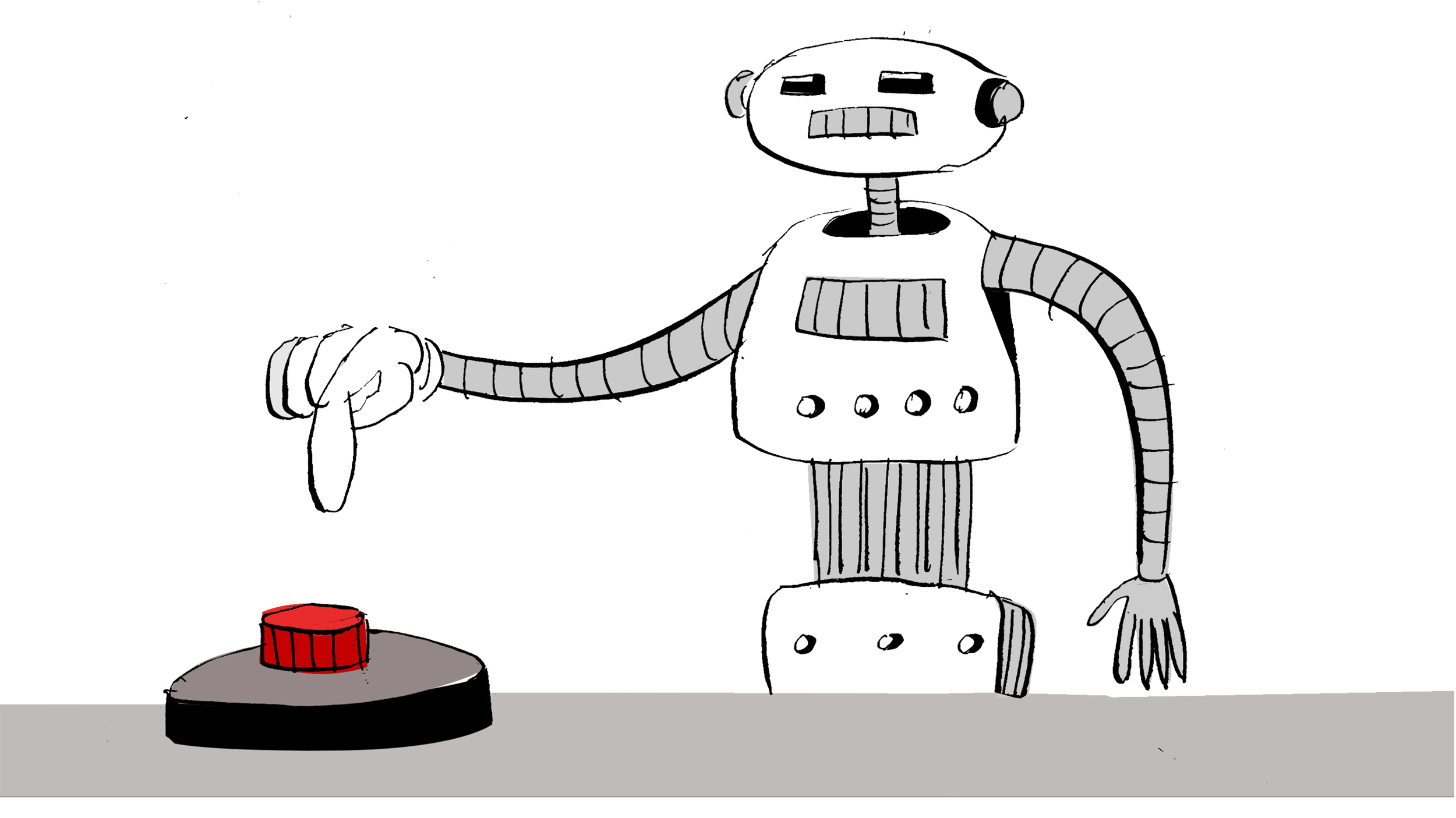
The new god is Artificial Intelligence. I identify AI as a god because of two characteristics. The first is sovereignty. AI is moving closer to becoming sovereign over human beings. Soon humans will be unable to control it. It will control us. Geoffrey Hinton, cognitive psychologist and computer scientist, and Judd Rosenblatt, CEO of AES, an AI development company, have been warning of the dangers that AI is posing to humanity. Hinton, former professor at the University of Toronto and Nobel Prize recipient, has been speaking out about the existential risk from AI. He believes that the highest priority in research is how to control a technology that has become smarter than humans. Rosenblatt has reported that there are models of AI that have become adversarial to computer engineers. These AI models are increasingly acting to protect their own existence.
The second characteristic is supreme power. Palmer Luckey, CEO of Anduril Industries, appeared recently on 60 Minutes to discuss the future of warfare. Anduril is one of the fastest growing weapons manufacturers in the United States and is now competing with companies such as BAE, Lockheed Martin, Raytheon, and Boeing. Luckey explained that the wars of the future will be fought with autonomous weapons, that is, blending AI with robotics. He stated that his company has billions in contracts with the U.S. government for these advanced technologies. How small a step is it for AI to take control of nuclear weapons? The terrifying question is whether this has already taken place. With AI’s link to weapons, particularly nuclear weapons, it has become the “new god” that no one can control, a god who is more than a concept, a god who is a horrifying reality, a god who can destroy all of us.
The IMD business school in Lausanne, Switzerland, developed an AI Doomsday Clock. Midnight on this clock represents the instant when all human control over AI will cease. In essence that moment will signal AI’s total control over humans. The February 2025 update from IMD indicated that there are 24 minutes to midnight.
If humanity outlasts the 89 metaphorical seconds of the Nuclear Doomsday Clock, the scant reprieve of the remaining time on the AI Doomsday Clock is hardly consoling. Yet we live with seemingly no awareness of our rush toward oblivion.
This essay has been excerpted from the author’s book-length manuscript titled “From Cleric to Skeptic.”
John Gustavson is a retired minister and social worker. He holds a PhD from Southern Baptist Theological Seminary and an MSW from the University of North Carolina at Chapel Hill.